Educational Content · Women's Wellness

The ingredient your grandmother used every week, and almost no one cooks with anymore

A short presentation on collagen, satiety and body composition — and why the kitchen habit that quietly left the modern breakfast table is being discussed again.

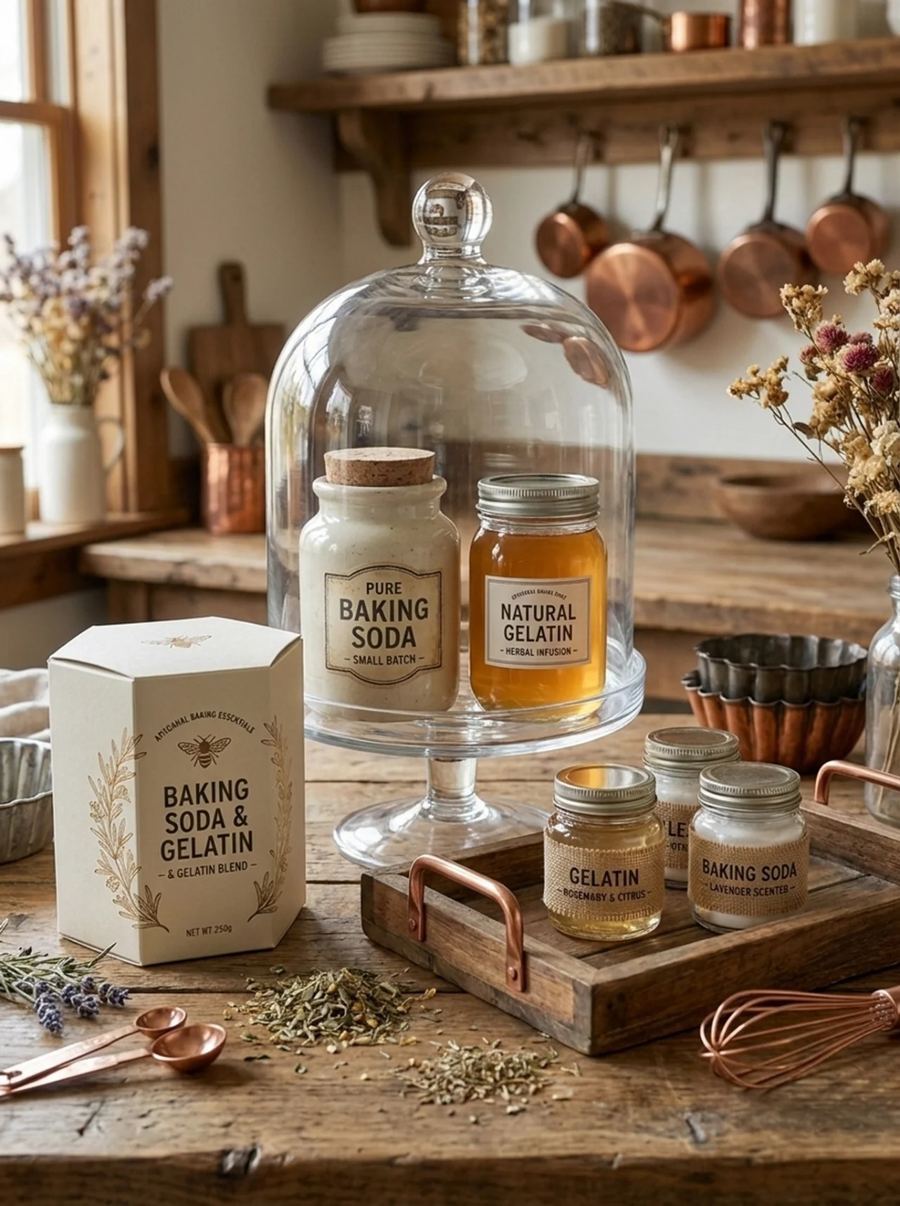
Farmhouse kitchen counter with jars of gelatin and baking soda, copper pans and dried herbs Free presentation · 4 minWatch the free presentation

No sign-up required · Educational content only

What Actually Changes

It was never really a willpower problem

Four shifts that nutrition and physiology literature describe in women's bodies over time. None of them are character flaws, and none of them are fixed by trying harder.


01

Collagen synthesis slows down

Collagen is the structural protein that holds skin, joints and connective tissue together. The body's natural production is generally described as declining gradually with age, and the effect tends to show up first in the places women notice every morning in the mirror.

02

Satiety signals get quieter

Meals built mostly around refined carbohydrates are digested quickly. Protein and fibre are the parts of a meal most associated in research with fullness that lasts, which is why a large breakfast can still leave you looking for something at ten in the morning.

03

Lean mass is quietly traded away

Body composition is the ratio of lean mass to fat mass. Without enough daily protein and some resistance to work against, that ratio can drift over the years even when the number on the scale barely moves. The scale simply is not built to report this.

04

Traditional dieting fights the wrong battle

Cutting calories without protecting protein quality, sleep and daily structure is difficult to sustain, and the literature on adherence is fairly blunt about it. Most plans do not fail at week one. They fail at week seven, when the plan stops fitting the life around it.

Sorting It Out

Three things women are told, and what the research usually says


Myth

"After a certain age a woman's metabolism is simply broken."

What research describes

Metabolic research generally points to gradual changes in body composition, hormones and daily movement rather than a switch flipping at a birthday. Gradual changes respond to gradual habits, which is the more useful part of the finding.

Myth

"Eating less is always the answer."

What research describes

Nutrition literature repeatedly returns to protein intake, sleep and consistency as the practical levers most people can actually hold on to. Restriction alone is the most common approach and one of the least sustained.

Myth

"Collagen is only a beauty topic."

What research describes

Collagen is the most abundant protein in the human body and sits in skin, joints, tendons and gut lining alike. Skin is simply the part you can see, which is why it became the marketing story instead of the whole story.

The Approach

Three steps, in this order, because the order is the point

This is a structure for building a habit, not a diet plan and not a protocol. It is deliberately small enough to survive a bad week.


01

Anchor the morning with protein

The first meal sets the tone for the appetite curve of the whole day. Instead of adding rules, the step is subtractive: make sure protein is present before anything else is decided. Everything downstream gets easier when the morning stops being a sugar spike.

02

Rebuild the base your kitchen used to provide

Collagen-rich foods were once a by-product of ordinary cooking — long-simmered stock, gelatin desserts, the cuts nobody throws away. Modern shopping habits removed them without replacing them. This step puts that base back in a form that fits a real morning.

03

Repeat it until it is boring

A habit that requires motivation is not a habit yet. The target here is not intensity, it is a routine so unremarkable that you stop noticing you are doing it. Consistency over months is what the literature on behaviour change keeps rewarding.

Where It Comes From

The pantry habit that industrial food quietly deleted


Walk into almost any kitchen from a hundred years ago and you would find the same thing on the back of the stove: a pot that had been simmering far longer than it needed to. Bones, joints, the tough cuts. Nobody called it wellness. It was simply what you did with the parts of the animal that could not be sold, and it produced a broth that set into jelly when it cooled.

That jelly is gelatin. It is collagen that has been broken down by long, slow heat into something the body can handle more easily. The same thing appeared in the desserts on the table, in the aspics, in the puddings set in the cold pantry — all of it, without anyone framing it as nutrition, delivered a steady weekly supply of collagen protein.

Then the supply chain changed. Cuts of meat arrived trimmed and boneless, stock came from a cube, and dessert came from a factory. The habit did not get replaced by a better one. It just stopped, and it stopped so quietly that two generations later most women have never knowingly eaten a collagen-rich food in their lives.

Hydrolyzed gelatin is simply the modern shortcut back. The collagen is broken into smaller fragments so it dissolves in a cold drink rather than requiring six hours on the stove — the same protein source, arriving in a format that fits a morning that has to be out the door by eight.

The part worth sitting with: nothing new was invented here. What happened is that an ordinary kitchen by-product left the modern diet without anybody deciding it should, and the interesting question is not what to add, but what was removed.

Common Observations

Six things women mention, usually in this order

These are everyday observations reported in wellness contexts, not symptoms and not a checklist for anything. They are listed because recognising a pattern is easier than describing it.


Hunger that comes back too fast

You ate a real breakfast and you are somehow negotiating with the kitchen before eleven.

Skin that lost some of its bounce

Not lines exactly. More the way skin used to spring back and now takes a moment to decide.

Joints that are louder in the morning

Knees on the first flight of stairs, or hands that need a minute before they feel like yours.

Same weight, different fit

The scale has not moved in two years and yet the same trousers sit differently. Composition, not weight.

The three o'clock drop

An energy dip in the afternoon reliable enough that you have started planning your day around it.

Nails that peel and split

They break at a length they never used to break at, and hair feels thinner at the ends.

These observations are not diagnostic and are not evidence of any condition. If something concerns you, speak with a qualified healthcare professional.

Reader Perspectives

How women describe the change in the habit itself


Illustrative example
"What actually surprised me was how ordinary it became. It is not a plan I follow, it is just the first thing I do while the kettle boils, and I stopped thinking about it around week three."
Marina W.
Illustrative · 41
Illustrative example
"I had spent years counting things. This was the first time I added something to the morning instead of removing something, and honestly that alone changed how the whole day felt."
Denise O.
Illustrative · 36
Illustrative example
"My mother made stock every single Sunday and I never once made it myself. Reading about where gelatin actually comes from was the part that stayed with me, not the rest of it."
Camille A.
Illustrative · 52

The perspectives above are illustrative examples created for this article to show how the habit is commonly described. They are not real customer accounts, are not endorsements, and are not evidence of any outcome. Individual results may vary.

Questions

What people ask before reading further


What is hydrolyzed gelatin?

Gelatin is collagen that has been broken down by heat — it is what makes a long-simmered stock set into jelly in the fridge. Hydrolyzed gelatin takes that a step further: the protein chains are cut into much smaller fragments through a process called hydrolysis. The practical difference is that it dissolves in cold liquid and does not gel, so it can go into water, coffee or a smoothie instead of requiring a recipe.

Is gelatin the same thing as collagen?

They come from the same source. Collagen is the intact structural protein; gelatin is what collagen becomes once heat has broken it down; hydrolyzed gelatin (often sold as collagen peptides) is gelatin broken down further still. The labels are largely a description of how far along that process the protein has travelled.

Is this a diet or a weight-loss program?

No. This page is educational content about collagen, protein and satiety, and about a food habit that used to be ordinary. It does not prescribe a diet, does not set calorie targets, and makes no claim about weight. Any decision about your own nutrition belongs with you and a qualified healthcare professional.

When would someone normally take it?

The morning is the most commonly described timing, mainly for practical reasons: it attaches to an existing routine, and protein early tends to be the part of the day most people skip. There is no requirement in that, and a habit you will actually keep beats a theoretically optimal time you will not.

Does it taste of anything?

Unflavoured hydrolyzed gelatin is generally described as close to neutral, with a faint savoury note some people notice in plain water and almost nobody notices in coffee or a smoothie. This is one reason it survived as a kitchen staple for so long: it disappears into whatever it is added to.

Could I just get this from food instead?

Yes, and for most of human history that is exactly how it happened — bone broth, slow-cooked joints, homemade stock, traditional gelatin desserts. The obstacle is not availability, it is time. A pot that simmers for six hours is a different proposition in a modern week, and that gap is the whole reason the shortcut exists.

Is any of this medical advice?

No. Everything on this page is general educational information and has not been evaluated by the Food and Drug Administration. Nothing here is intended to diagnose, treat, cure or prevent any disease. If you are pregnant, nursing, taking medication or managing a health condition, speak with a qualified healthcare professional before changing anything.

Free Presentation

The rest of it is explained in the video


Where the habit came from, why it left the modern kitchen, and how women are putting it back into an ordinary morning. Four minutes, no sign-up.

Watch the free presentation

Educational content · No medical advice · Individual results may vary